The front page says start with one method. This page is that method: one raised bed, one season, crops that finish. It will not feed a household year-round. It will teach the yard you actually have.
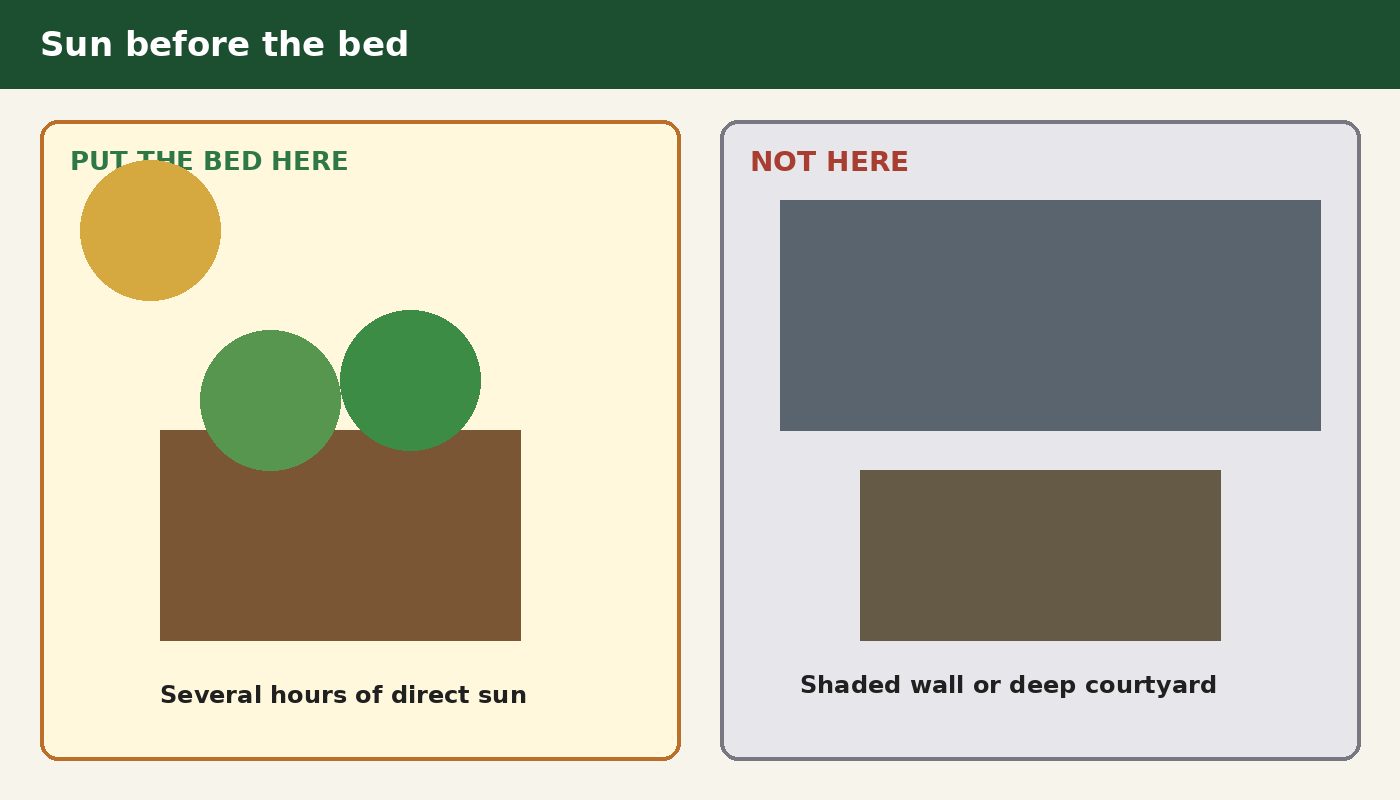
Most food crops want several hours of direct sun. A north strip or a deep courtyard will not match a south-facing open patch. Put the bed where the light is, not where the leftover space is. If the only spot is shade, containers of herbs may still work. A full vegetable bed will not.
Lumber or blocks, a depth you can reach, soil mix, seeds or starts. You do not need a workshop. If you want the first wood project version of a frame — cuts, square corners, what not to use for food beds — that lives here:
Soil is not fill dirt from a hole. A mix that drains is the year-one spend that matters more than decorative trim.
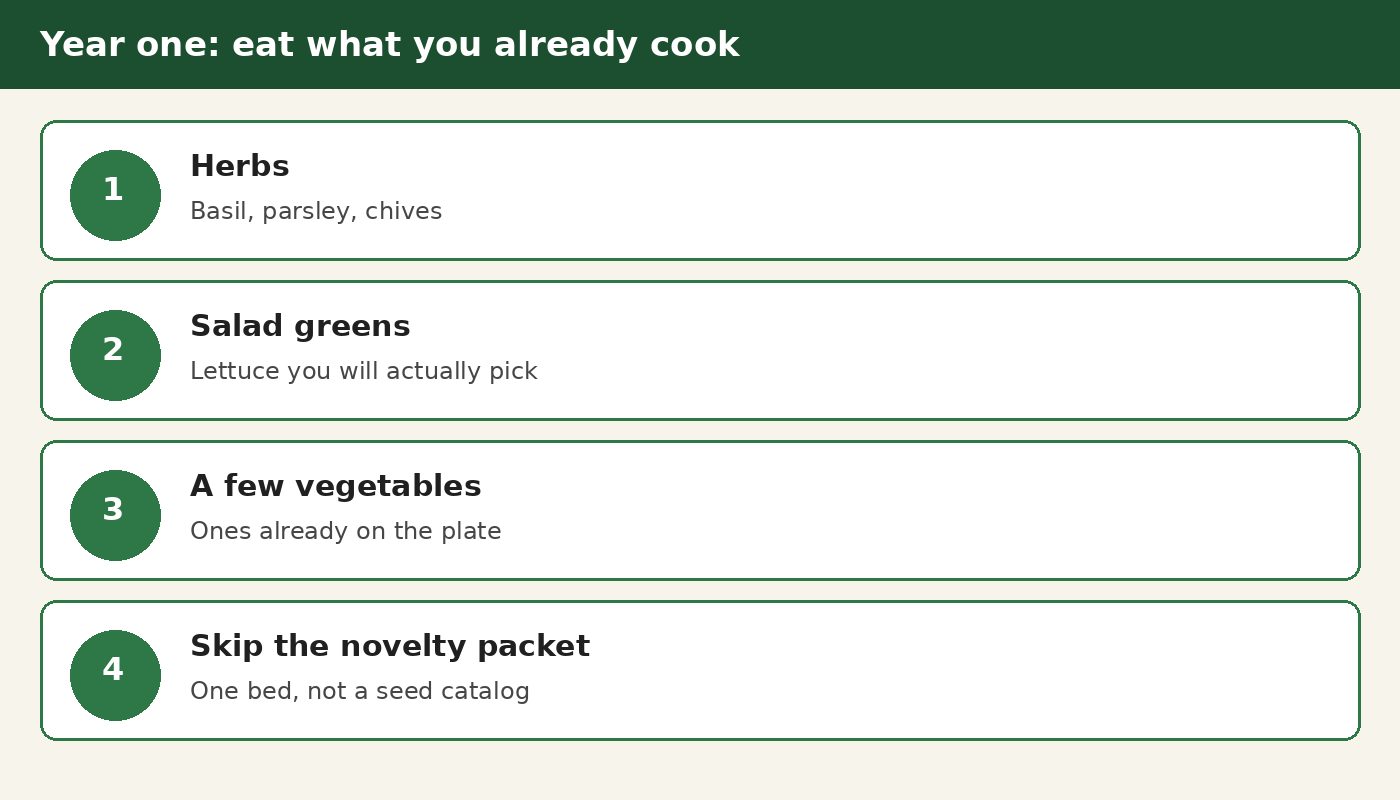
Herbs, salad greens, and a few vegetables you already eat. Skip the crops that need a long hot season if your summer is short. First harvest is weeks to months, not a Saturday. That timeline is normal.
Beds dry out. If you cannot water on a schedule, make the bed smaller. Rain barrels help a dry spell. They are not a well. Drinking water in an outage is a different page:
Water from air when the power is out
No yard, or you want food off the soil path, is the hydro lane:
Containers when space is tight
Season stretch and what a bed will not cover in winter:
Season and a thin grocery week
Backyard Miracle Farm is the paid digital plan this site uses for a small home food setup — garden first, fish optional. Sold through ClickBank. It is layouts and steps, not a bed in a box. Parts cost extra.
Backyard Miracle Farm — written DIY backyard food plan
This page contains affiliate links. If you buy through them, the site may earn a commission.
How big should year one be?
One bed you will actually water. A huge frame you abandon is not a farm.
What do you actually receive with Backyard Miracle Farm?
A digital written plan sold through ClickBank — not lumber, soil, or a kit.